The socio-political landscape of Lubbock, Texas, often described by its own inhabitants as a flat expanse of cotton, dust, and denominational redundancy, has recently evolved into a premier laboratory for the “Sanctuary Cities for the Unborn” (SCFTU) movement. This transformation, spearheaded by an East Texas activist with a penchant for backward baseball caps and a legal architect with a flair for civil-enforcement loopholes, represents a unique convergence of small-town quirk and high-stakes constitutional brinkmanship. The following report provides a cynical yet meticulously factual examination of Lubbock’s descent into municipal theocracy, the financial toll of its ideological performance art, and the 2026 collapse of academic freedom at its flagship medical institution.
Longview’s Gift to the High Plains: The Virgin King and His Architect
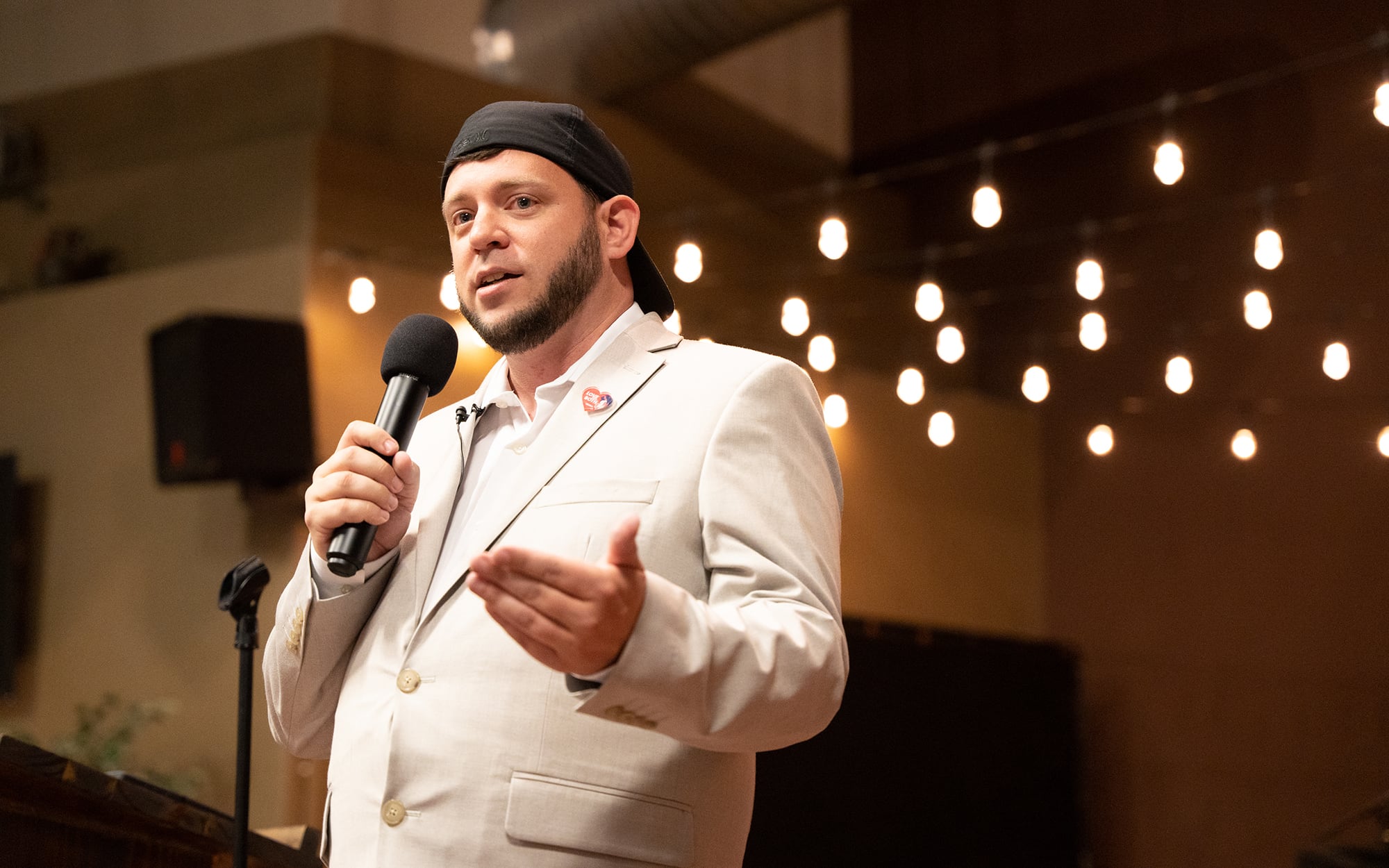
The narrative of Lubbock’s sanctuary status is inseparable from the personal branding of Mark Lee Dickson. Born in Longview, Texas, on August 16, 1985, Dickson transitioned from a director at Right to Life of East Texas to the founder of the SCFTU initiative. His public persona is a carefully curated blend of suburban youth pastor aesthetics—signature backward baseball cap, skateboard shoes, and a mustache-free beard—and radical legislative ambition. Dickson’s self-identification as a “lifelong virgin” serves as the moral bedrock for his crusade, a detail he frequently highlights in media appearances to bolster his image as an untainted defender of the unborn.
While Dickson provides the grassroots energy, the legal scaffolding is provided by Jonathan F. Mitchell, the former Solicitor General of Texas. Mitchell is the mastermind behind the private-enforcement mechanism, a legal “innovation” that empowers private citizens to act as bounty hunters, filing civil lawsuits against anyone who assists in an abortion. This mechanism was first test-driven in Waskom, Texas, in 2019, before being scaled up for Lubbock—the “Hub City” that ironically sought to become a hub of litigation.
| Key Figure | Role | Signature Trait/Tool |
| Mark Lee Dickson | Founder, SCFTU | Backward cap, “lifelong virgin” status |
| Jonathan Mitchell | Legal Architect | Private civil-enforcement mechanism (SB 8) |
| Jodey Arrington | U.S. Congressman | Lubbock-based supporter of the movement |
| Charles Perry | State Senator | Facilitated the Lubbock ordinance push |
The 2021 Lubbock Referendum: A Unanimous Failure of Leadership
The journey to sanctuary status in Lubbock began with a rare moment of institutional competence that was swiftly overridden by a populist-clerical alliance. On November 17, 2020, the Lubbock City Council, a body generally not known for its progressive leanings, voted 7–0 against the proposed sanctuary ordinance. The council members, rightfully fearing that the ordinance was a “ceremonial declaration” with the potential for massive legal liability, initially chose the path of fiscal and legal sanity.
However, the rejection only served to activate a well-funded campaign led by “Project Destiny Lubbock.” This group, with the assistance of local megachurches like Southcrest Baptist and Trinity Church, gathered enough signatures to force a special election on May 1, 2021. The campaign was characterized by a distinct “only in Lubbock” fervor, where banners screaming “Vote for Life” were hung from church steeples, and pastors framed the ballot box as a spiritual battlefield. The result was a 62% victory for Proposition A, with 21,403 voters deciding that the city’s legal budget was an acceptable casualty in their moral crusade.
The Financial Toll of Ideological Purity
While the ordinance was marketed as a “no-cost” solution due to Mitchell’s promise of pro-bono defense, the actual campaign and administrative costs suggest a different reality. Project Destiny Lubbock reported spending over $56,000 to secure the vote, including $35,579.38 paid to Lubbock political consultant Mike Stevens. These figures do not account for the city’s administrative burden or the subsequent legal battles that saw Planned Parenthood briefly offer services in April 2021 before being shuttered by the ordinance’s effective date of June 1, 2021.
The absurdity of the situation was compounded by the fact that while Lubbockites were voting to ban a medical procedure, they were also being asked to authorize $174 million in debt for street improvements—roads that would ironically later become the focus of a “trafficking” ban.
Road Rage and “Abortion Trafficking”: The 2023 County Expansion
In October 2023, the circus moved from the city hall to the Lubbock County Commissioners Court. Anti-abortion activists, unsatisfied with banning the procedure within city limits, sought to regulate the very physics of motion through the county’s unincorporated areas. The resulting ordinance targeted “abortion trafficking,” a term that linguistically upgrades a car ride to New Mexico into a international crime syndicate operation.
The Piece of Paper Doctrine
The debate in the commissioners court highlighted the exasperation of local officials who found themselves caught between constitutional reality and the “Sanctuary” fervor. Lubbock County Judge Curtis Parrish, who described himself as pro-life, abstained from the vote, famously stating, “We shouldn’t need a piece of paper that says you can’t drive on our roads”. Parrish was concerned that the ordinance would not survive the “scrutiny of state and federal appellate courts” and requested more time to evaluate the “physical impact” on taxpayers.
The ordinance passed 3-0, with Commissioners Jason Corley, Terence Kovar, and Jordan Rackler voting in favor. Commissioner Gilbert Flores, the court’s elder at 77, abstained, citing his own experiences with civil rights violations in the 1950s and his refusal to similarly infringe upon the rights of his granddaughters.
Dickson clarified that enforcement would not involve “mobile dolphin ultrasound units on roads or canines with ultrasound equipment” but would rely on the same “bounty hunter” civil suits pioneered by Mitchell. This clarification, while intended to be reassuring, only highlighted the sheer absurdity of the policy’s implementation.
The Corpus Christi Connection: Exporting the Hub City Drama
While Lubbock was busy banning travel, its most famous adopted activists were busy exporting their legal brand to the coast. The case of Davis v. Cooprider, filed in federal court in Corpus Christi in August 2025, became a centerpiece for Mark Lee Dickson’s social media activism, despite the “incident” occurring hundreds of miles away from the High Plains. The case represents the peak of the “wrongful death” legal strategy Dickson and Mitchell have refined through their work in Lubbock.
In this increasingly surreal saga, Liana Davis, represented by Mitchell, sued her neighbor, U.S. Marine Christopher Cooprider, alleging he secretly dissolved ten abortion pills into her hot chocolate.
The “Fatal Attraction” Defense
The drama escalated when Cooprider countersued for $100 million in late 2025, claiming the entire incident was a fraudulent fabrication intended to destroy his military career. Cooprider’s filing compared Davis’s allegations to a screenplay written for Glenn Close in Fatal Attraction, claiming she faked pregnancies and miscarriages to harass him. Even though this tabloid-worthy mess happened in Corpus Christi, Dickson used it to lobby for more restrictive road bans and “protections” in places like Lubbock, claiming it as a victory for the movement he pioneered here.
The 2026 Texas Tech Surrender: Academic Freedom in the Crosshairs
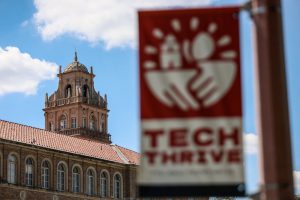
The culmination of Lubbock’s transformation into an ideological fortress occurred in early 2026 at the Texas Tech University Health Sciences Center (TTUHSC). In January 2026, the student chapter of Medical Students for Choice invited Dr. Shelley Sella, an OB-GYN, to speak about medical and ethical considerations surrounding later-pregnancy abortions.
The reaction from the sanctuary lobby was swift. Mark Lee Dickson took to Facebook, claiming he “knew I had to start making some calls” and comparing the medical talk to a lecture on how to manufacture illegal drugs or commit rape. Turning Point USA at Texas Tech joined the fray, arguing that the talk was “promoting illegal activities” despite the fact that Texas law does not prohibit medical education or discussion about abortion care.
The Spinal Erasure of the Administration
Faced with a few Facebook posts and a student group’s Instagram statement, the TTUHSC administration performed a spectacular spinal erasure. University officials canceled the event, stating only that it was “not in the best interest of the university” to host the talk. Turning Point USA later thanked System Chancellor Brandon Creighton and Dickson for their “work in upholding the law,” effectively signaling that academic discourse at Texas Tech is now subject to the veto power of a man in a backward baseball cap.
The cancellation drew condemnation from medical education advocates like Pamela Merritt, who questioned the “quality of education” at a medical school that “caves to a political activist”. The irony was not lost on critics: a university whose side is literally inscribed with the phrase “We are the future of health” refused to allow its future doctors to listen to a talk on reproductive health ethics.
The Sanctimony for the Unborn: Analyzing the “Lubbock Sucks” Paradox
Lubbock’s journey from 2019 to 2026 reveals a town that has fully embraced its own contradictions. It is a “Hub City” that bans people from traveling through it. It is a “Sanctuary” whose ideological leaders are exporting $100 million “Fatal Attraction” lawsuits to the coast. It is home to a major medical school that is afraid of a doctor with a book.
The movement, while claiming to represent the “moral values” of West Texas, has primarily functioned as a legal experiment funded by mysterious sources and executed through the weaponization of the civil court system. The 2021 referendum cost taxpayers their Planned Parenthood clinic, the 2023 road ban cost them their constitutional consistency, and the 2026 Texas Tech cancellation cost them their academic integrity.
The Comstock Zombie and the Future of the Hub
The sanctuary movement’s ultimate goal is a national ban achieved through the Comstock Act, a “zombie law” from 1873. Dickson and Mitchell argue that this law already bans the mailing of abortion pills across the entire country, meaning every state is already a “sanctuary” if the right judges are found. Lubbock was merely the testing ground for this theory, a place where the wind blows hard enough to make people believe that a municipal ordinance can stop a car on I-27.
By 2026, the “Lubbock Suck-Cycle” is complete. The city has traded its reputation as a regional center of education and healthcare for a new identity as a legal theme park for activists who believe that “abortion trafficking” is a more pressing issue than the city’s notoriously cratered streets.
| Event Year | Major Milestone | Key Absurdity |
| 2020 | City Council Vote | 7-0 rejection ignored by activists |
| 2021 | Sanctuary Election | Church banners replace political platforms |
| 2023 | Road Travel Ban | I-27 becomes a “trafficking” zone |
| 2025 | Wrongful Death Suit | Hot chocolate used as a prop for federal Comstock cases |
| 2026 | Tech Cancellation | A medical school bans a medical lecture |
The Ultimate Ironic Observation
In the end, Lubbock has achieved exactly what Mark Lee Dickson promised: it is a city set apart. It has successfully insulated itself from the legal norms of the 21st century and the educational standards of modern medicine. As the “Hub City” continues to close its doors and roads, one is left with the nagging question of whether a sanctuary is actually just a very large, very flat, very dusty prison for anyone who values the right to travel, the right to speak, or the right to have a medical conversation without a “lifelong virgin” checking the guest list.
Is there anything more Lubbock than spending $56,000 to ban a procedure that wasn’t even happening in 2020, only to watch the activists we “proudly” host pivot to a $100 million “Fatal Attraction” legal circus on the coast in 2026? The answer, as any regular reader of Lubbock Sucks knows, is a resounding and exasperated “no”.