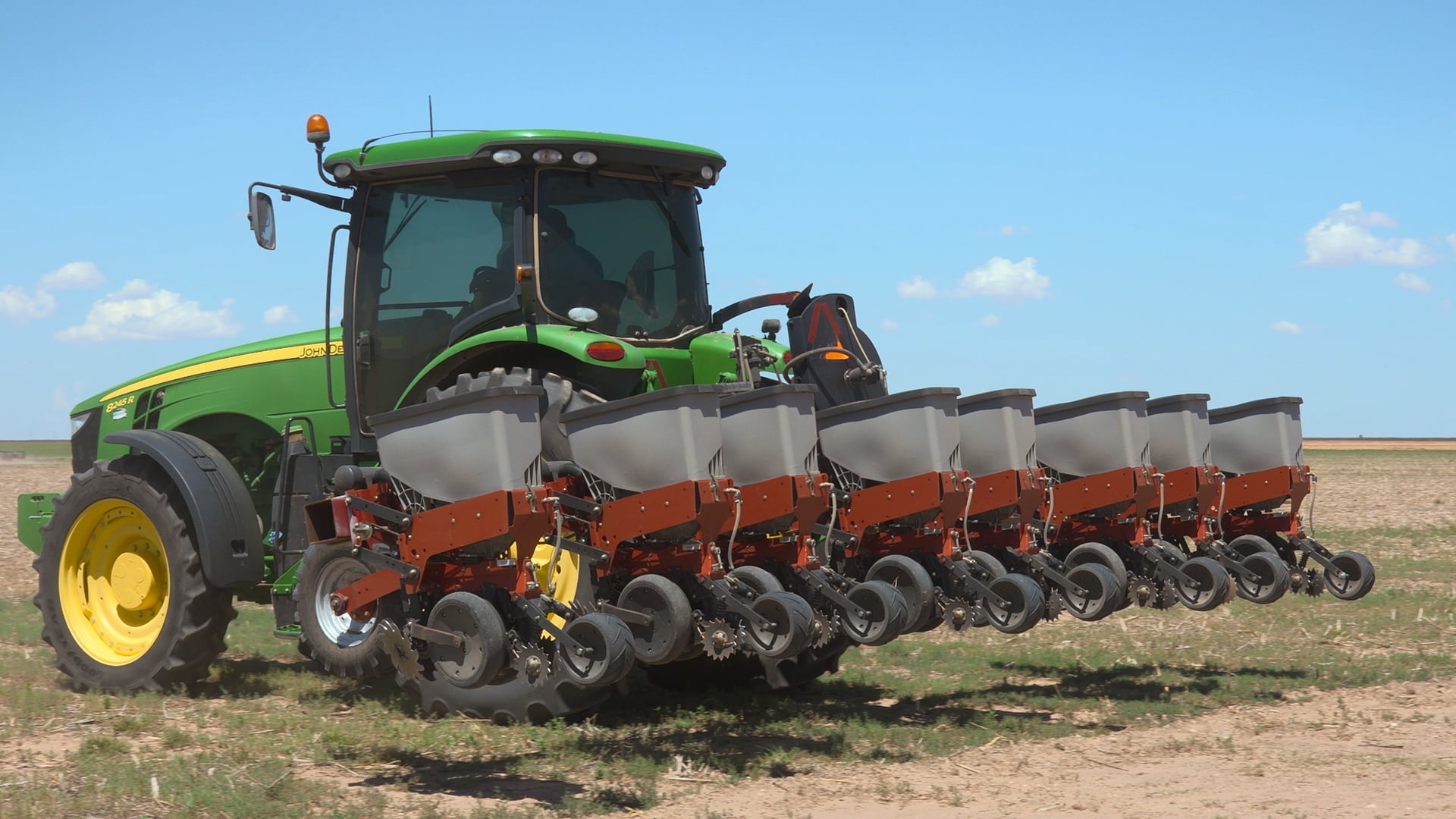
It’s that magical time of year in the Hub City metroplex where local cotton farmers are frantically drag-racing the clock to dump seeds into the dirt before Friday’s crop insurance deadline. Because nothing says “sustainable economic foundation” quite like a panicked dash against bureaucratic cut-offs, all while praying the West Texas wind doesn’t just blow your topsoil into New Mexico by Saturday morning.
Enter our protagonist, Conner Watts, a first-generation farmer out of Slaton who is bravely entering his second planting season. While veteran agriculturalists with actual survival instincts are eagerly jumping ship and getting out of the business, Watts cheerfully admits he’s just “hard-headed” enough to keep going. He’s staking his financial future on the fact that cotton futures—which teased 90 cents a few weeks ago before predictably dropping back to around 80 cents—will somehow go on another wild bull run.
And what’s a West Texas gamble without relying on the single most erratic entity in existence? The weather. Watts is placing his bets on a predicted “Super El Niño” to bring late-summer rains, because relying on the Lubbock climate to behave logically is historically a foolproof strategy. It rained a couple of weeks ago, so naturally, everyone is expecting a bumper crop, blissfully ignoring the fact that the sky here usually offers nothing but dirt and disappointment.
Of course, it wouldn’t be a 2026 farming story without some casual global chaos. Thanks to the war involving Iran, fertilizer prices are skyrocketing. Watts managed to pre-book his chemicals early, but he’s still staring down the barrel of diesel prices that have casually doubled since January—perfectly timed for when tractors actually need to move. Still, our local optimist remains unfazed, boldly hoping the Middle East conflict just wraps itself up by harvest time so fuel stabilizes.
Because when your entire financial survival hinges on the whims of a volatile global commodities market, world peace breaking out in the next three months, and the Lubbock sky actually producing water instead of a haboob, what could possibly go wrong?
Source: