
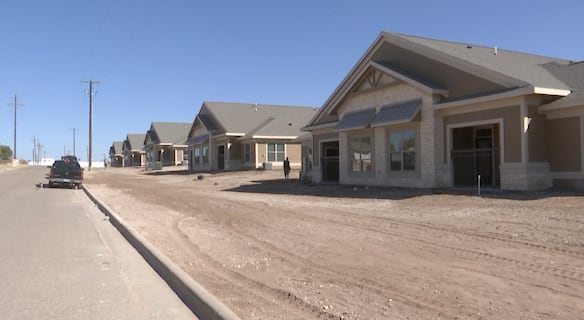
If you have ever driven down Slide Road at 5:15 PM, dodging a lifted Ford F-250 that is currently occupying two lanes while emitting a cloud of unburnt diesel particulate that would make a Victorian chimney sweep cough, you have experienced the essence of Lubbock, Texas. We like to pretend we are a “metropolitan” area. We slap brick veneer on our houses, plant a few struggling saplings in the “parkway,” and talk about our “Hub City” status with a straight face. But let’s be honest with ourselves for once: Lubbock is not a city. It is a brick trailer park. It is a sprawling, disorganized, unregulated collection of private fiefdoms where the social contract has been replaced by a “Don’t Tread on Me” bumper sticker fading in the West Texas sun.
This report is not merely a collection of complaints; it is a forensic analysis of our municipal failure. We are digging into the zoning laws that allow your neighbor to run a heavy industrial fabrication shop out of his garage. We are dissecting the budget that prioritizes widening roads to seven lanes over making them survivable for pedestrians. We are looking at the dust (physically and metaphorically) that coats everything we own. From the “illegal dumping” in our alleyways to the collapse of our public schools, the evidence is overwhelming: we have built a habitat that prioritizes the machine over the human, the private over the public, and the “good enough” over the “good.”
So, buckle up. We are going deep. We are going to talk about why your street hasn’t been fixed in 40 years, why the bus only comes once an hour, and why “rolling coal” is considered a valid form of political expression here. We are going to roast the hypocrisy of a town that prides itself on “community” while retreating behind the walls of tax-exempt churches and private schools. This is the definitive account of life in the Brick Trailer Park.
You can put lipstick on a pig, and you can put a brick facade on a chaotic, unregulated mess of a town, but at the end of the day, you’re still just one code violation away from parking on the lawn.
The Esthetics of Apathy — Housing, Zoning, and the Myth of the Neighborhood
The Veneer of Respectability
The fundamental deception of Lubbock begins at the curb—or, more accurately, where the curb would be if we maintained our infrastructure. We are a city obsessed with brick. It is the uniform of the South Plains, the architectural equivalent of a stiff upper lip. It suggests permanence. It suggests stability. It suggests that the structure behind it is built to last. But in the Brick Trailer Park, the masonry is often just a mask. Behind those sturdy red and brown facades lies a mentality that is distinctly transient, a refusal to engage in the basic maintenance of civilization that separates a “neighborhood” from a “collection of adjacent lots.”
The illusion of the residential zone is the first casualty of our analysis. In a functioning municipality, zoning laws exist to create separation between where people sleep and where people manufacture widgets. These laws are designed to ensure that the peace and quiet of a home is not shattered by the sound of an angle grinder at 11:00 PM. In Lubbock, however, zoning is treated with the same reverence as a speed limit sign on Loop 289: a suggestion, easily ignored if one is in a hurry or simply feels like it.
Recent legislative shifts have codified this apathy. The “Home-Based Business Fairness Act” (House Bill 2464), celebrated by local media as a victory for the entrepreneurial spirit, has effectively legalized the transformation of our residential streets into light industrial parks.1 The narrative spun by proponents is heartwarming: it’s about grandma selling her knitted scarves on Etsy or a tutor teaching piano lessons in the living room. Who could oppose that? It’s the American Dream!
But the reality of the Brick Trailer Park is far less quaint. The legislation, and the city’s subsequent enforcement (or lack thereof), has opened the floodgates for contractors and small business owners to bypass the inconvenience of commercial rent. Why lease a warehouse in an industrial park when you have a two-car garage and a driveway? The result is neighborhoods that look less like Leave It to Beaver and more like the back lot of a logistics company.
The City of Lubbock’s code regarding “Customary Home Occupation” is a masterpiece of unenforceable optimism. It defines a home business as an enterprise that is “customarily conducted in a ‘residential dwelling’… subject to compliance with each of the following conditions”.2 Let’s examine these conditions against the reality on the ground:
- The Law: The occupation must be “incidental and subordinate to the principal use of the residential dwelling.”
- The Reality: Walk down any alley in Tech Terrace or the suburbs south of 82nd, and you will find properties where the house is clearly just an accessory to the business. The driveway is the primary feature, stacked with trailers, ladders, and welding rigs. The “residence” is merely the break room for the crew.
- The Law: There shall be “no offensive noise, vibration, smoke, dust, odors, heat or glare beyond the property lines”.2
- The Reality: “Offensive” is subjective, and in Lubbock, the bar for offense is set incredibly high. We live in a city where wind speeds regularly hit 40 mph; a little extra dust from a neighbor’s carpentry business is just “weather.” The noise of a compressor running all weekend is just the soundtrack of “productivity.” The code enforcement mechanism is entirely reactive, relying on neighbors to snitch on each other via the 311 portal.3 This creates a prisoner’s dilemma: do you report the guy fixing transmissions in his driveway and risk retaliation, or do you just turn up the volume on the TV? Most choose the latter, cementing the trailer park ethos of “mind your own business.”
The Lawn as a Parking Lot
If the home is the castle, the front lawn is the moat. In the Brick Trailer Park, we have decided to fill the moat with Dodges.
The psychology of parking in Lubbock is fascinatingly broken. In most urban environments, the “front yard” is a semi-public space that contributes to the streetscape. It is an aesthetic buffer. In Lubbock, it is overflow storage. The “Lubbock Lean”—a heavy-duty truck parked with two wheels on the pavement and two wheels crushing a sprinkler head—is not just an aberration; it is a lifestyle choice.
The City of Lubbock has ordinances against this, of course. The code explicitly states: “Vehicles found parked on unpaved surfaces will receive a citation, without any warning”.3 It further clarifies that parking is prohibited on any “sidewalk, sidewalk area or parkway”.4 The language is unambiguous. The intent is clear: keep the cars on the concrete.
Yet, a drive through the “Heart of Lubbock” or even the newer developments reveals a widespread rebellion against this tyranny of pavement. Why does this happen? It is a function of the vehicle-to-house size ratio. The standard Lubbock driveway was poured in the 1950s, 70s, or 90s, designed for sedans or modest pickups. The modern Lubbock resident, however, drives a vehicle the size of a Sherman tank. The Ford F-250 Super Duty with a lift kit simply does not fit in the driveway, especially if the garage is already full of the aforementioned home-business inventory.2
So, the vehicle migrates. It conquers the sidewalk. It colonizes the lawn. This behavior degrades the neighborhood in multiple ways:
- Aesthetics: A street lined with trucks parked on dead grass looks like a salvage yard.
- Infrastructure: Sidewalks are not engineered to support the weight of a 7,000-pound truck.5 They crack and crumble, forcing pedestrians (if there are any) into the street.
- Soil Compaction: Parking on the grass kills the vegetation, which exposes the soil. In a city plagued by dust storms6, destroying ground cover is an act of environmental sabotage.
The city’s enforcement strategy is a game of Whack-a-Mole played with a rubber mallet. Residents are encouraged to use the “Online Citizen Help Portal” to report violations.3 The city claims that “Vehicles found parked on unpaved surfaces will receive a citation, without any warning”.3 But let’s look at the sheer volume of “neglected yards” and “parking on grass” complaints in the system. It is a deluge. The bureaucratic process involves notices, 7-day waiting periods for abatement8, and administrative fees that feel more like a nuisance tax than a deterrent.
The administrative fee for abatement is set at $175 per occurrence.8 For a landlord or a business owner cutting corners, this is just the cost of doing business. For a struggling homeowner, it’s a debt spiral. But for the guy with the $80,000 truck parked on the dirt? He likely views it as a parking fee. The culture of the Brick Trailer Park dictates that “my property rights extend to the curb,” and no piece of paper from City Hall is going to tell me where to put my dually.
The Alleyway: The Private Landfill
If the front yard is a parking lot, the alley is the abyss. In the design of the city, the alley was intended as a discreet service corridor for utilities and waste collection. In practice, it has become the city’s largest, unregulated landfill.
The phenomenon of “illegal dumping” in Lubbock is a testament to the profound laziness that permeates the Brick Trailer Park. We are not talking about a stray bag of trash here or there. We are talking about entire living room sets, shattered CRT televisions, construction debris, and, according to some reports, “dead animals”.9
The city provides a service for bulky items. You can call. You can request a pickup.10 But that requires foresight. It requires a phone call. It requires admitting that you are responsible for your own waste. The Lubbock solution is far simpler: wait until dark, drag the mattress out the back gate, lean it against the dumpster, and pretend it no longer exists.
This behavior is categorized as “illegal dumping,” and it is one of the top complaints received by the city.11 The Lubbock Lights report highlights that this isn’t just a student problem; it is a resident problem. It is the “day-to-day problems” of residents leaving bulky items next to dumpsters or, worse, tossing lithium-ion batteries into the trash, creating fire hazards.11
The cost of this apathy is socialized. When the Solid Waste department has to deploy a “grapple truck” to pick up your discarded sofa, that costs money. It takes time. It delays the regular route. The budget for solid waste services is constantly under pressure, with rate increases proposed to cover these operational realities.12 We are literally paying higher taxes and fees because our neighbors are too lazy to drive to the landfill.
The alleyway in Lubbock is the physical manifestation of our collective id. It is where we hide our shame, our broken things, and our refuse. It is a “Tragedy of the Commons” played out on a grid of dirt lanes behind our brick homes. We maintain the facade of the front yard (barely), but in the alley, the mask comes off, and the true nature of the Brick Trailer Park is revealed: a place where personal convenience always trumps public responsibility.
The Asphalt Wasteland — The Stroad to Nowhere
The Seven-Lane Death March
If you want to understand the soul of a city, look at its streets. Not the residential side streets, but the arteries—the places where the city moves. In Lubbock, the street is not a place for people; it is a hostile environment designed exclusively for the rapid movement of heavy machinery. We do not have boulevards; we have “stroads”—a hellish hybrid of a street (where businesses are located) and a road (a high-speed thoroughfare).
The City of Lubbock’s Master Thoroughfare Plan and the recent bond elections reveal an addiction to asphalt that borders on pathology. The solution to every traffic problem is “widening.” The documents explicitly list projects to “Build 7-lane Arterial” roads.13 Let’s pause and consider the scale of a seven-lane road. Two lanes each way with medians and thought out turn lanes? No, in Lubbock, it is three lanes each way plus a “Two-Way Left Turn Lane” (TWLTL), creating a massive, 110-foot-wide scar of pavement cutting through neighborhoods.
Projects like the widening of Quaker Avenue (130th to 146th) or Slide Road are budgeted at tens of millions of dollars.13 The cost for construction is approximately $3 million per lane mile.13 We are pouring hundreds of millions of dollars into concrete to facilitate the sprawl that makes the concrete necessary. It is a Ponzi scheme of infrastructure.
Consider the pedestrian experience on a seven-lane arterial. The “Plan Lubbock 2040” documents talk about a “6-foot buffer” and a “10-foot sidewalk”.15 But have you ever tried to walk next to seven lanes of traffic moving at 50 mph (let’s be real, the speed limit is 45, but no one drives 45)? It is a deafening, terrifying experience. The sheer width of the road means that crossing the street is an athletic feat. If you are elderly, disabled, or just slow, you are effectively trapped on one side of the river of steel.
The “parkway”—that strip of land between the curb and the sidewalk—is theoretically a place for trees and beautification. In reality, in the Brick Trailer Park, it is a dead zone of compacted dirt, weeds, or, as previously noted, a parking spot for a truck.4 The city’s “Complete Streets” rhetoric 16 is a cruel joke. A street is not “complete” just because you painted a bicycle symbol in the gutter. It is complete when a human being can exist there without fear of death. Lubbock’s streets are designed for one thing: getting from the driveway to the drive-thru as fast as possible.
The Pothole as a Geological Feature
For a city that worships the car, we treat the surface the car drives on with shocking disdain. The condition of Lubbock’s roads is a constant source of rage, humor, and suspension damage for residents. The term “pothole” feels inadequate; these are geological features, craters that have existed long enough to be named on maps.
The case of the Jackson-Mahon neighborhood is instructive. Residents there waited 40 years for their roads to be repaired.17 Four decades. That is an entire generation born, raised, and moved away while the asphalt crumbled into dust. When the city finally acted, it was framed as a triumph of the “Street Maintenance Program.” In any functional city, waiting 40 years for road repair would be a scandal. In Lubbock, it’s just Tuesday.
The budget documents show a “Street Maintenance Program” funded at around $14.5 million for FY 2025-26.12 This sounds like a lot of money until you look at the scale of the sprawl. Lubbock covers over 130 square miles. The density is low. The road miles are high. $14.5 million is a drop in the bucket. It is enough to do “seal coats”—that cheap, messy process that covers the road in loose gravel and tar, cracking windshields and chipping paint—but rarely enough for full reconstruction.
The result is a patchwork quilt of repairs. We fill holes. We patch the patches. We apply seal coat to roads that are structurally failing. Residents on Reddit lament that their vehicles, even luxury cars, are turned into “rusty shopping carts” by the ride quality.18 The infrastructure reflects the “trailer park” mentality: fix it with duct tape (or cold patch asphalt) and hope it holds until the next guy takes office.
The Merge: A Study in Stubbornness
The physical infrastructure is bad, but the software (the drivers) are worse. Driving in Lubbock is a psychological battle against a populace that views the “yield” sign as an insult to their heritage.
The “on-ramp” behavior in Lubbock is the stuff of legend. In other cities, an on-ramp is used to accelerate to highway speeds. In Lubbock, it is customary to enter the freeway at 35 mph, forcing 65 mph traffic to slam on the brakes.19 This isn’t caution; it is a lack of situational awareness that borders on the pathological. The driver entering the highway believes, fundamentally, that the highway should adjust to them.
Conversely, the “merge” is treated as a competition. If a lane is closed for construction (which is always), the Lubbock driver will merge miles early, creating a single line of traffic stretching to the horizon. If you, a rational actor, attempt to “zipper merge” at the designated point, you are viewed as a moral failure. You will be blocked. You will be honked at. You will be run off the road. The “crab bucket” mentality is strong here: “I am suffering in this line, therefore you must suffer too.”
The Mad Max Commute — Trucks, Coal, and Carnage
Rolling Coal: The Exhaust of Insecurity
If the seven-lane stroad is the stage, the lifted diesel truck is the villainous lead actor. In the Brick Trailer Park, the truck is not a tool; it is an avatar. It is a projection of the owner’s ego, insecurities, and political affiliations, all wrapped in a 7,000-pound package of steel and chrome.
“Rolling coal”—the intentional modification of a diesel engine to spew thick black smoke—is the ultimate expression of this toxicity. It is not an accident. It requires money and effort to tune an engine to run this inefficiently. The goal is simple: to “smoke out” perceived enemies. Who are the enemies? Cyclists. Prius drivers. Pedestrians. Anyone who looks like they might care about the environment.5
The police enforcement of this behavior is sporadic at best. We see reports of “task forces” joining forces to prevent fatal crashes and issuing citations20, but these are special operations, not daily enforcement. The day-to-day reality is that if you are on a bike, you are a target. Residents share stories of being followed, yelled at, and engulfed in smoke simply for existing on the road.21
The truck culture in Lubbock has evolved into an arms race of absurdity. It is not enough to have a truck. It must be lifted. It must have tires that stick out six inches past the fender wells, throwing rocks at the windshields of the peasants behind them. It must have an LED light bar capable of signaling the International Space Station, which is used exclusively to blind sedan drivers at stoplights.22
This is the “Might Makes Right” philosophy of the trailer park applied to traffic engineering. I am bigger than you; therefore, I have the right of way. I am louder than you; therefore, I am right. The road is not a shared public space; it is a dominance hierarchy, and the guy with the most lug nuts wins.
The Hostility to Pedestrians and Cyclists
Good luck crossing these 7-lane monstrosities on foot–the data confirms that luck is indeed required. Lubbock is a city where walking is viewed as a sign of poverty or insanity.
The statistics on pedestrian and cyclist fatalities are grim. State-wide trends show a 22% increase in pedestrian deaths and a 58% increase in bicyclist fatalities 23, and Lubbock contributes its fair share to this carnage. The “Pedestrian Safety Action Plan” identifies “focus facilities”—roads where crashes are concentrated.24 Unsurprisingly, these are the high-speed arterials where we have failed to provide safe crossings.
Bike lanes, where they exist, are often an afterthought. They are painted lines in the “door zone” of parked cars, or they disappear randomly at intersections, dumping the cyclist into moving traffic.25 The “active transportation” network is fragmented.26 The master plan talks about “shared-use paths” and “striped buffers,” but the reality on the ground is that a cyclist is sharing the road with a driver who is texting, eating a burrito, and actively hostile to their presence.
To ride a bike in Lubbock is to engage in extreme sport. It is an act of defiance. The infrastructure tells you: “You do not belong here.” The drivers tell you: “Get off the road.” The wind tells you: “Go home.”
Citibus: The 60-Minute Insult
For those who cannot drive the lifted truck, there is Citibus. Or rather, there is the idea of Citibus.
The public transportation system in Lubbock is a case study in inadequacy. The service frequency on most local routes is 60 minutes.27 An hour. Imagine missing the bus and having to wait an hour for the next one. In the summer heat. In the dust. With no bench and no shelter.
The system is designed for the desperate, not the commuter. If you have a job that requires punctuality, relying on a bus that comes once an hour is a recipe for termination. The “Express” routes27 are limited to peak hours and specific corridors, mostly serving Texas Tech students. The “Core” routes offer 30-minute frequency, but only on specific trunks. For the vast majority of the city, the bus is a rumor.
The budget and profile documents reveal the struggle: high operating expenses, reliance on federal grants, and a service area that is too spread out to cover efficiently.29 The “Transit Master Plan” explicitly notes that the system is “confusing,” lacks technology, and fails to serve the population effectively.30
This is the transit system of a Brick Trailer Park. It is the bare minimum required to say “we have a bus system.” It is a safety net full of holes. It reinforces the car dependency that chokes the city, ensuring that if you are poor, elderly, or disabled, you are effectively under house arrest.
The Air We Choke On — Dust, Smells, and the Environment
The Haboob Life
Lubbock residents love to talk about the “grit” of West Texas. They use it as a metaphor for toughness. But let’s be literal: the grit is in your teeth. It is in your eyes. It is in your lungs.
We live in one of the dustiest regions in North America. The “Haboob”—a massive, apocalyptic wall of dust—is our signature weather event.31 It is nature’s way of reminding us that we have stripped the soil of its protective cover and replaced it with cotton fields and parking lots.
The data on air quality is terrifying. During these dust events, PM10 (particulate matter) levels can skyrocket to 166 μg/m³ or higher.6 This isn’t just “dirty air”; it is a health hazard. Studies specific to Lubbock have shown statistically significant increases in hospital admissions for respiratory diseases, cardiovascular disease, and even neurodegenerative diseases like Parkinson’s and Alzheimer’s following dust events.32 We are literally breathing ourselves into dementia.
And yet, we do nothing to mitigate it. We park on the grass, killing the vegetation that holds the soil in place. We leave vast tracts of land undeveloped and unmaintained. We ignore the air quality warnings. The dust is just part of the price of admission to the Brick Trailer Park.
The Smell of Money (and Manure)
It’s not just the dust. It’s the smell. Depending on the wind direction, Lubbock is frequently blanketed in the aroma of the feedlots that surround the city. Locals euphemistically call it “the smell of money.” A more accurate description would be “the smell of thousands of cows confined in their own waste, aerosolized and drifted into your dining room.”
This olfactory assault is just another layer of the sensory overload that is living here. The noise of the trucks. The grit of the dust. The stench of the manure. It creates an environment that is fundamentally unpleasant, a place where the goal is to move as quickly as possible from one climate-controlled box (house) to another (car) to another (office). The “outdoors” is something to be endured, not enjoyed.
The “Community” — Privatized and Polarized
The Church and the Bar
Where do people meet in the Brick Trailer Park? There is no town square. There is no vibrant downtown promenade. The public parks are often desolate, windswept stretches of dead bermudagrass.33
The “community” has been bifurcated into two distinct, privatized spheres: the Church and the Bar.
Lubbock has a staggering number of churches.34 They are the true community centers of the city. They are tax-exempt fortresses of social life. If you are part of the flock, you have a built-in social network, basketball courts, coffee shops, and daycare. The church absorbs the functions of the state. It provides the charity, the social safety net, and the recreation. But this community is exclusive. It is behind a wall of belief. If you are not a member, you are on the outside looking in.
For the secular (or the merely thirsty), there are the bars. But even here, the zoning laws of the Brick Trailer Park intrude. The regulation of alcohol in Lubbock is a labyrinth of hypocrisy. We have “restaurants” that are clearly bars, operating under “mixed beverage permits” that require them to navigate convoluted food-to-alcohol ratios.35 The “Depot District” is our designated fun zone, but it is an island in an industrial wasteland, separated from the rest of the city by tracks and bad roads.
The laws regarding alcohol service are strict—separation from churches and schools is mandatory.37 In a city with a church on every corner, this effectively zones nightlife out of existence in many areas. The result is that socializing is pushed to the margins, or into the private homes where the “home-based businesses” are operating.
The Hollow Center
What is missing is the public realm. The “Third Place” that is neither work nor home, and isn’t a church or a bar. The library. The community center. The walkable street.
Lubbock’s downtown is a ghost town of empty office buildings and parking lots, perpetually “revitalized” in the fever dreams of city planners but never in reality. The “Citizen Help Portal”3 is the closest thing we have to a town square—a digital wailing wall where we post complaints about weeds and potholes.
There is little pride in the city as a collective entity. The pride is in the property. “My house.” “My truck.” “My church.” The space between these islands of ownership is viewed as a no-man’s-land. This lack of civic cohesion is why we can’t pass a bond to fix the roads properly, why our schools are struggling, and why the alleys are full of trash. We don’t see ourselves as neighbors; we see ourselves as co-occupants of a geographic region.
The Education Evacuation — The Future is Private
The Charter School Exodus
The final nail in the coffin of Lubbock’s civic unity is the dismantling of the public school system. The Brick Trailer Park does not believe in public education; it believes in “school choice,” which is code for “get my kid away from those kids.”
Lubbock Independent School District (LISD) is in a death spiral of declining enrollment and budget deficits.38 The district has passed deficit budgets and is now looking at closing and consolidating schools.40 The list of schools closed or restricted for transfers41 reads like an obituary for neighborhood stability.
Why is this happening? Because the aspirational class of the Brick Trailer Park—the ones with the brick veneer homes and the home businesses—are pulling their kids out. They are sending them to charter schools or private religious academies. The “vouchers” debate is alive and well here, with many church-affiliated schools standing to gain from state funds.42
This effectively segregates the education system. The wealthy and the religious isolate themselves in private enclaves, leaving the public schools to deal with the students who have the highest needs and the fewest resources. It is a mirroring of the residential pattern: privatization of the good, socialization of the bad.
When a neighborhood loses its school, it loses its anchor. It becomes just another collection of houses. The rise of charter schools—often run like businesses—parallels the rise of the home-based contractor. It is the commercialization of yet another public good.
The Grand Unified Theory of the Brick Trailer Park
Lubbock is not a brick trailer park because of the architecture. It is a brick trailer park because of the attitude. It is a place where the collective good is consistently sacrificed on the altar of individual convenience.
The Theory holds that:
- Zoning is a Suggestion: We treat residential neighborhoods as light industrial zones because we are too cheap to pay commercial rent.
- Infrastructure is Hostile: We build roads for speed, not people, and then refuse to maintain them because taxes are theft.
- Space is for Storage: We use our lawns and alleys as landfills and parking lots because we have too much junk and too little shame.
- Community is Private: We retreat into churches and private schools, abandoning the public square to the dust and the tumbleweeds.
- The Truck is King: We drive weaponized vehicles to compensate for the hostility of the environment we created.
We have built a city that is hostile to pedestrians, indifferent to the environment, and segregated by class and creed. We have wrapped it in brick veneer and planted a few trees, but the roots don’t go deep. Underneath, it’s just dirt, asphalt, and the stubborn refusal to admit that we live in a society.
So, welcome to Lubbock. Park on the grass. Dump your couch in the alley. Roll coal on a cyclist. You’re home.
References
- New Texas Law Protects Home-Based Businesses—and It’s a Big Win for Lubbock Entrepreneurs – Awesome 98, https://awesome98.com/new-texas-law-protects-home-based-businesses-and-its-a-big-win-for-lubbock-entrepreneurs/
- Customary Home Occupation, https://ci.lubbock.tx.us/storage/images/A6Uf2UI3YZ6TX3Xvq2Lx1l2Ju51DLnqw8tTxzV78.pdf
- Code Administration – City of Lubbock, Texas – Departments, https://ci.lubbock.tx.us/departments/code-administration/services
- CHAPTER 36 STREETS, SIDEWALKS AND OTHER PUBLIC WAYS – City of Lubbock, https://ci.lubbock.tx.us/storage/images/aGSIg64wYh6RDMvr3fuNAYhhiLswdcuzcMHneILH.pdf
- Teen Driver Hits Group of Cyclists While Rolling Coal Near Houston, TX – Enjuris, https://www.enjuris.com/blog/tx/teen-driver-hits-cyclists/
- the ambient dust study at lubbock lake landmark – USDA ARS, https://www.ars.usda.gov/ARSUserFiles/30960515/Stout_pubs/Stout_1999_5thDesert_Dust.pdf
- Code – City of Lubbock, Texas – Departments | 311 Citizen’s Request, https://ci.lubbock.tx.us/departments/311-citizens-request/submit-a-report/code
- City of Lubbock, TX Weeds, Rubbish and Unwholesome Situations – eCode360, https://ecode360.com/38879851
- “They need to stop… people live here:” Lubbock County residents complain of illegal dumping string – YouTube, https://www.youtube.com/watch?v=CA7NFVsz404
- Report Illegal Dumping – City of Lubbock, Texas – Departments | Solid Waste Management, https://ci.lubbock.tx.us/departments/solid-waste-management/requests-reports
- Illegal dumping in Lubbock alleys is one of the biggest complaints city gets – here’s what you can (and can’t) do about it, https://lubbocklights.com/illegal-dumping-in-lubbock-alleys-is-one-of-the-biggest-complaints-city-gets-heres-what-you-can-and-cant-do-about-it/
- FY 2025-26 OPERATING & CAPITAL BUDGET – City of Lubbock, https://ci.lubbock.tx.us/storage/images/ET2q9yLJLdXYKoPmMRHBcFdwVJ1DMqCForhteeSF.pdf
- 2022 Roadway Bond Update – City of Lubbock, https://ci.lubbock.tx.us/storage/images/6FI6XPgSMVxBO7Y2AkTa9xZFA7rsnV1TFs5xgE06.pdf
- Appendix A- Projects List – City of Lubbock, https://ci.lubbock.tx.us/storage/images/gnt2eOcYafRMB5M15f04FTqgQ8wqesLw95NyMIYx.pdf
- Going forward, Lubbock’s major street projects planning to be five lanes, not seven. Why? Money’s one reason, https://lubbocklights.com/going-forward-lubbocks-major-street-projects-planning-to-be-five-lanes-not-seven-why-moneys-one-reason/
- Ultimate Guide: Lubbock Complete Streets, Bike Lane Rules – KFYO, https://kfyo.com/what-are-lubbock-complete-streets/
- City of Lubbock to start repair on Jackson-Mahon neighborhood roads in next few weeks, https://www.youtube.com/watch?v=dzHY5SWoRMU
- Lubbock Vs Amarillo – Reddit, https://www.reddit.com/r/Lubbock/comments/15o89tm/lubbock_vs_amarillo/
- Why do people get on the highways so slow? : r/Lubbock – Reddit, https://www.reddit.com/r/Lubbock/comments/1c40jpf/why_do_people_get_on_the_highways_so_slow/
- Lubbock law enforcement pulls over 750 drivers following task force – YouTube, https://www.youtube.com/watch?v=ExjtdjmlJz4
- Texas car shop faces criticism after video appears to show owner ‘rolling coal’ on cyclist — Star-Telegram : r/bicycling – Reddit, https://www.reddit.com/r/bicycling/comments/ubekm0/texas_car_shop_faces_criticism_after_video/
- When Did “Blinding” Become a Truck Feature? : r/texas – Reddit, https://www.reddit.com/r/texas/comments/1ax8tb5/when_did_blinding_become_a_truck_feature/
- Pedestrians, bicyclists most vulnerable on Texas roads, https://www.txdot.gov/about/newsroom/statewide/pedestrians-bicyclists-most-vulnerable-on-texas-roads.html
- Lubbock District, https://ftp.dot.state.tx.us/pub/txdot/ptn/psap/appendix-a/lbb-ped-safety-profile.pdf
- Pedestrian and Bicycle Plan – City of Lubbock, https://ci.lubbock.tx.us/storage/images/zgSQACNmfIMBVxA7f6lJyZHsPmEFB0n8qwXYlsEv.pdf
- 4. Existing and Future Conditions – City of Lubbock, https://ci.lubbock.tx.us/storage/images/Odv0yiUSctSz7FUjlS7MwymYzxX3XCrCLjcGJikg.pdf
- Citibus Updated 5-Year Service Plan – F&P Social Pinpoint, https://fp.mysocialpinpoint.com/lubbock-citibus
- Citibus Final Five-Year Service Plan – City of Lubbock, https://ci.lubbock.tx.us/storage/images/WdXcPN19PdEEmdOU3oU4lK0eiCMbGL9XetWQNx6J.pdf
- 2022 Annual Agency Profile – City of Lubbock dba CITIBUS (NTD ID 60010) – Federal Transit Administration, https://www.transit.dot.gov/sites/fta.dot.gov/files/transit_agency_profile_doc/2022/60010.pdf
- Texas Tech University Departments, https://www.depts.ttu.edu/parking/PDFsandDocuments/TransportationMasterPlanExecutiveSummary.pdf
- Texas High Plains walloped by dust storms fed by drought, high winds – The Texas Tribune, https://www.texastribune.org/2023/02/24/texas-lubbock-dust-storms-drought-haboob/
- View of Update-Exposure to dust events and hospitalizations in West Texas cities: The human health consequences of dust | The Southwest Respiratory and Critical Care Chronicles, https://pulmonarychronicles.com/index.php/pulmonarychronicles/article/view/1325/2885
- Parks & Recreation – City of Lubbock, Texas – Departments, https://ci.lubbock.tx.us/departments/parks-recreation/parks
- Does Lubbock Have the Most Churches in Texas? – Lonestar 99.5, https://lonestar995fm.com/does-lubbock-have-the-most-churches-in-texas/
- Texas Alcoholic Beverage Code – ALCO BEV § 11.49 | FindLaw, https://codes.findlaw.com/tx/alcoholic-beverage-code/alco-bev-sect-11-49/
- Bar, Club, and Hotel Liquor Licenses in Lubbock – Texas Alcohol Consulting, https://texasalcoholconsulting.com/how-to-get-a-bar-event-club-or-hotel-liquor-license-in-lubbock/
- CITY OF LUBBOCK, https://ci.lubbock.tx.us/storage/images/zxkdMXDlugLW7sHTd1KVL685OfuGTfbAZcLYIEbR.pdf
- Lubbock-area superintendents talk budget struggles, state and local support – KTTZ, https://radio.kttz.org/2024-08-23/lubbock-area-superintendents-talk-budget-struggles-state-and-local-support
- New process to guide future LISD school closings/consolidations approved by trustees, who hope it helps public be more involved – Lubbock Lights, https://lubbocklights.com/new-process-to-guide-future-lisd-school-closings-consolidations-approved-by-trustees-who-hope-it-helps-public-be-more-involved/
- LISD trustees review recommendations for campus closures and consolidations, final decision to come – KTTZ – Texas Tech Public Media, https://radio.kttz.org/2024-11-22/lisd-trustees-review-recommendations-for-campus-closures-and-consolidations-final-decision-to-come
- Intradistrict (In-District)/Interdistrict (Out of District) Transfers Open and Closed Campuses 2024-2025 All campuses in Lubbock – AWS, https://core-docs.s3.us-east-1.amazonaws.com/documents/asset/uploaded_file/3628/LISD/3468637/_Open_Closed_Campuses_for_2024-2025_Regular_and_Intradistrict_Transfers.pdf
- Lubbock ISD stands to be gutted by private school vouchers this fall – Reddit, https://www.reddit.com/r/Lubbock/comments/1kmfrtm/lubbock_isd_stands_to_be_gutted_by_private_school/