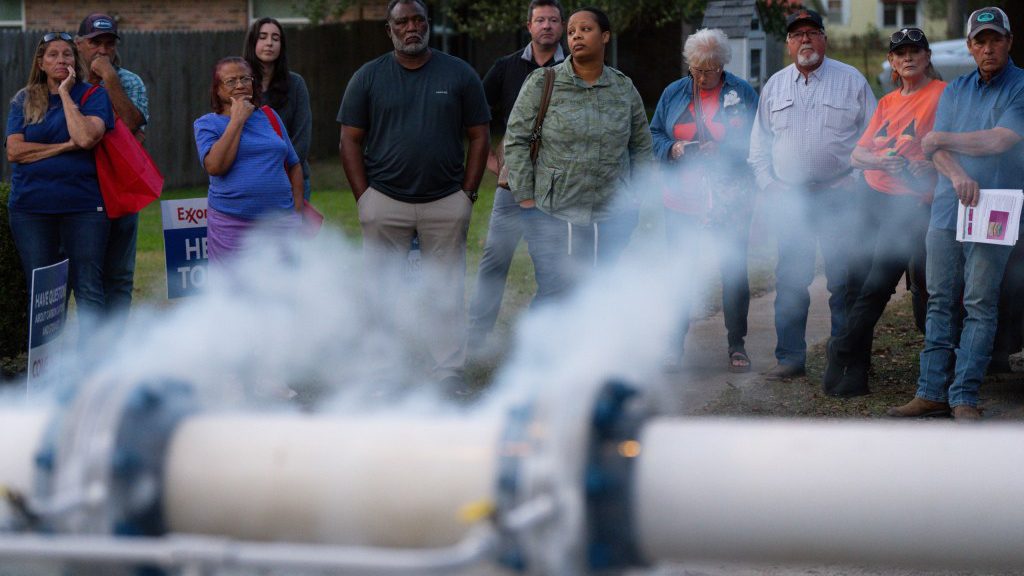
Texas regulatory bodies have had an exceptionally productive autumn proving that residential zoning and clean air are merely polite suggestions. Between state officials approving an experimental carbon dioxide dump next to East Texas homes and Lubbock discovering an unpermitted industrial asphalt plant had been quietly running in a residential neighborhood for over a decade, Texas oversight is humming along at peak efficiency.
According to the Texas Tribune, the Texas Railroad Commission recently approved ExxonMobil’s project to compress carbon dioxide and inject it deep underground next to Cheek, a predominantly Black rural community outside Beaumont. Railroad Commission Chair Christi Craddick scolded the oil giant for failing to communicate with worried residents, suggesting the company “Give ‘em a fire truck if that’s what they want,” before promptly voting to approve the permit anyway. Meanwhile, Commissioner Wayne Christian voted against the permit after publicly arguing that carbon dioxide is actually good for plants.
Down the road in Nome, ExxonMobil wooed the locals with boudin balls and vented gas from a demonstration pipeline with a cheerful shout of “let it rip, tater chip,” while the local mayor marveled that “Santa Claus came.” Nothing says cutting-edge environmental stewardship quite like fairground catering and mystery vapor clouds.
Back home on the South Plains, local developers took a somewhat less theatrical approach: simply ignoring municipal law for fourteen years. TTU Public Media reports that Lubbock’s Planning and Zoning Commission considered a request to rezone 72 acres near the Parkway Cherry Point neighborhood from single-family residential to light industrial, after Webber LLC erected an asphalt plant churning out dust less than 600 feet from existing homes. Scott Collier, speaking for the property owners, explained that using the site for a batch plant three different times since 2012 occurred “unbeknownst to the owner or to any of the operators, that we were not in compliance with zoning.”
The city’s crack code enforcement division responded to the violation on September 1 by setting a compliance deadline of December 7, effectively gifting the facility three months of bonus operation. But while Austin regulators rubber-stamped corporate pipelines over local objections, Lubbock commissioners actually broke character and voted 5-to-1 against recommending the industrial rezoning after four generations of community leaders, including 98-year-old Rose Wilson, showed up to demand the city protect its own neighborhoods.
Who knew that following the zoning codes established in 1954 would count as a sudden burst of municipal progress?
Sources: